
What Is NIPP Testing and Is It Safe During Pregnancy?
Finding out you are pregnant is life-changing. For some women, that moment also comes with questions about paternity that need to be answered before the baby arrives. If you are in that situation, you are not alone, and there is a safe, accurate way to get answers without waiting until after delivery.
It is called NIPP testing, and it is one of the most requested services we help clients navigate.
What NIPP Testing Is
NIPP stands for non-invasive prenatal paternity testing. It is a DNA test that can determine whether a specific man is the biological father of a baby while the pregnancy is still in progress. The test is non-invasive, meaning it does not require any procedure that enters the womb or poses a risk to the pregnancy.
It is worth noting that NIPP is different from NIPT, which stands for non-invasive prenatal testing. NIPT is a screening test that looks for chromosomal conditions like Down syndrome. The two tests serve completely different purposes, and the names are similar enough to cause real confusion. If your goal is to determine paternity, NIPP is the test you are looking for.
How It Works
NIPP testing is possible because of something called cell-free fetal DNA. During pregnancy, small amounts of the baby’s DNA circulate naturally in the mother’s bloodstream. Scientists identified this phenomenon in 1997, and it became the foundation for non-invasive prenatal testing of all kinds.
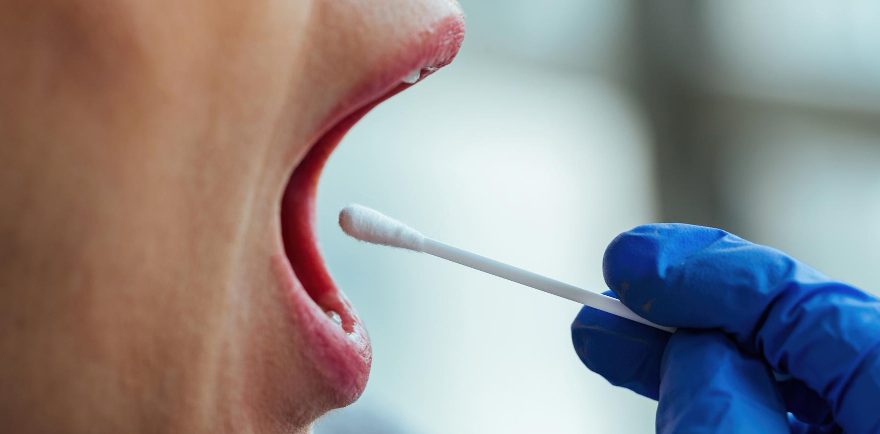
For a NIPP test, a blood sample is drawn from the mother. The lab then isolates the fetal DNA from that sample and compares it to a DNA profile built from a cheek swab taken from the potential father. Because a child inherits half their DNA from their biological father, the comparison can confirm or exclude paternity with a very high degree of accuracy.
When the test confirms a biological match, the result is typically 99.9% accurate. When it excludes a potential father, that result is 100% conclusive.
How Early Can You Test?
NIPP testing can be done as early as 7 to 8 weeks into the pregnancy. This is one of the most significant advantages it has over older methods. In the past, the only prenatal options for determining paternity required invasive procedures like amniocentesis or chorionic villus sampling, both of which carry a small but real risk of miscarriage. Neither of those is necessary for paternity determination anymore.
The further along the pregnancy, the more fetal DNA is present in the mother’s blood, which makes the sample easier to analyze. Most providers require a minimum of 7 to 8 weeks to ensure there is enough fetal DNA for an accurate result.
Is It Safe?
Yes. For the mother, it involves a standard blood draw, the same kind done at any routine medical appointment. For the baby, there is no risk at all. The fetal DNA is already circulating in the mother’s blood naturally. The test collects what is already there without touching the pregnancy in any way.
This is the key difference between NIPP and the invasive prenatal procedures that came before it. Amniocentesis and CVS both require a needle to be inserted into the uterus or placenta. NIPP does not. The only thing required from the mother is a blood draw, and the only thing required from the potential father is a cheek swab.
What the Process Looks Like
The process starts with scheduling a collection appointment. The mother comes in for a blood draw, and the potential father provides a buccal swab, either at the same appointment or separately. Both samples are then sent to the accredited laboratory for analysis.
Results typically come back within 5 to 7 business days, though timing can vary by provider and lab. Once results are ready, they are delivered securely, and you should have access to someone who can walk you through what they mean.
One important thing to know before you test is whether you need results that will hold up legally. A standard NIPP test is highly accurate, but if results may be needed for a custody case, child support proceeding, or any legal matter, the collection must be done under chain-of-custody protocols. This means a neutral third party verifies the identity of everyone being tested and documents the process from start to finish. If you are unsure whether you need the legal version, it is always worth asking before you schedule, because the collection process is different and you cannot convert a non-legal test into a legal one after the fact.
What Clients Ask Us Most
The questions we hear most often before someone schedules a NIPP test are about privacy, safety, and timing. Women want to know whether their doctor needs to be involved (the test is done independently of your OB and does not require a referral), whether the process is confidential (yes, results are delivered privately to you), and whether waiting longer will make the results more accurate (results are accurate at 7 to 8 weeks, and waiting longer does not change the outcome, only the ease of processing the sample).
The other thing that comes up often is what to do if the potential father is unwilling to participate. A cheek swab requires consent from the person being tested, so participation cannot be forced. If this is your situation, speak with us directly and we can walk you through your options.
The Bottom Line
NIPP testing is one of the most significant advances in prenatal care of the last two decades. It gives women answers during pregnancy without any risk to themselves or their baby, using technology that did not exist for previous generations. If you have questions about whether it is right for your situation, the best first step is a conversation, not a commitment.
Sources:
Lo YM, et al. Presence of fetal DNA in maternal plasma and serum. Lancet. 1997.
American College of Obstetricians and Gynecologists (ACOG): acog.org
National Institutes of Health, MedlinePlus: medlineplus.gov